
Thinking with Things
A New Materialist Methodology for Investigating and Designing for Humans and Nonhumans


About the Project
As environmental and societal challenges intensify, we need new ways of understanding how humans and nonhumans—technologies, materials, plants, and animals—shape shared futures. The project Thinking with Things addresses this challenge from the perspectives of Human-Computer Interaction (HCI) and Interaction Design (IxD). Inspired by New Materialism, it explores how technologies and materials can be understood not merely as passive tools but as active participants in the world.

New Materialism
aka Posthumanism, More-than-human, Nonhuman, focusing on:
- humans & nonhumans & their relations
- material conditions & (re-)configurations
- equality, sustainability, care
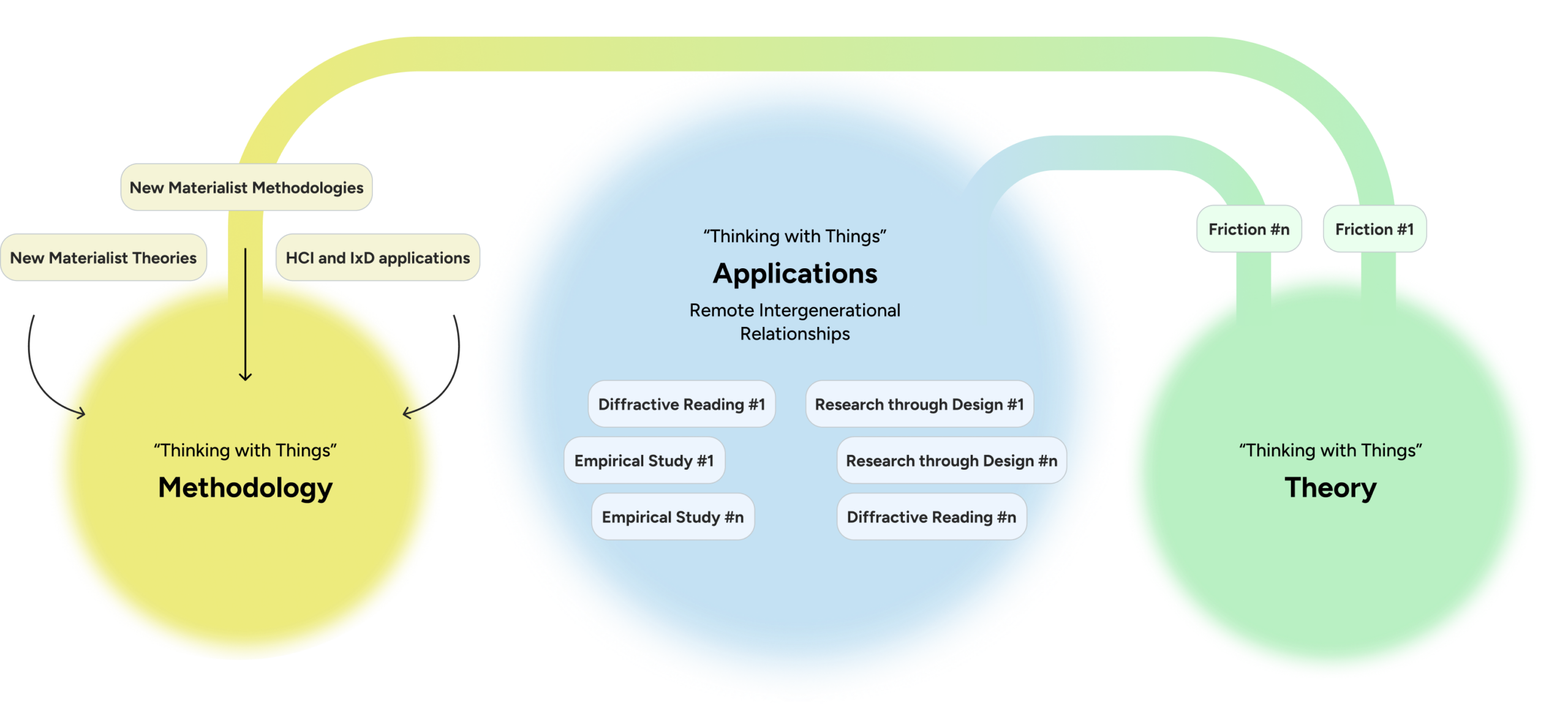
The project aims to develop a research methodology called Thinking with Things, asking how New Materialist ideas can inform the study and design of technologies and how nonhuman actors can be more meaningfully included in research and design processes. To explore these questions, the project focuses on relationships between grandparents and grandchildren living apart, particularly nature-oriented remote activities involving birds, plants, forests, lakes, and mountains.
Research Questions
Aim: Developing the yet lacking methodological foundations of a New Materialist HCI.
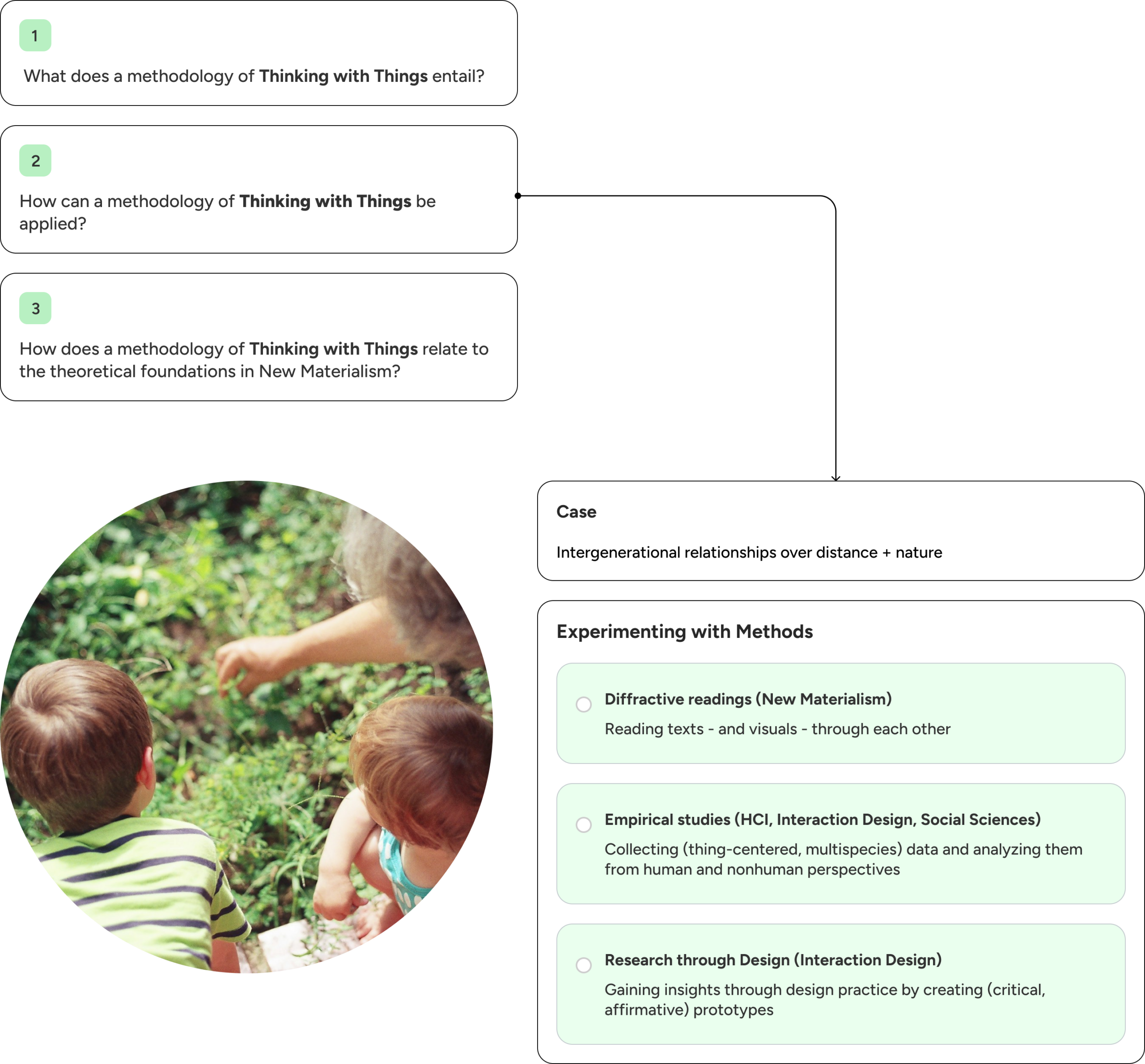
This case highlights the complex entanglements of humans, technologies, and the natural world, providing a basis for experimenting with methods that attend to both human and nonhuman perspectives. Ultimately, the project seeks to inspire more inclusive and sustainable approaches to designing digital-physical futures that recognize our interconnectedness with the material and ecological worlds around us.
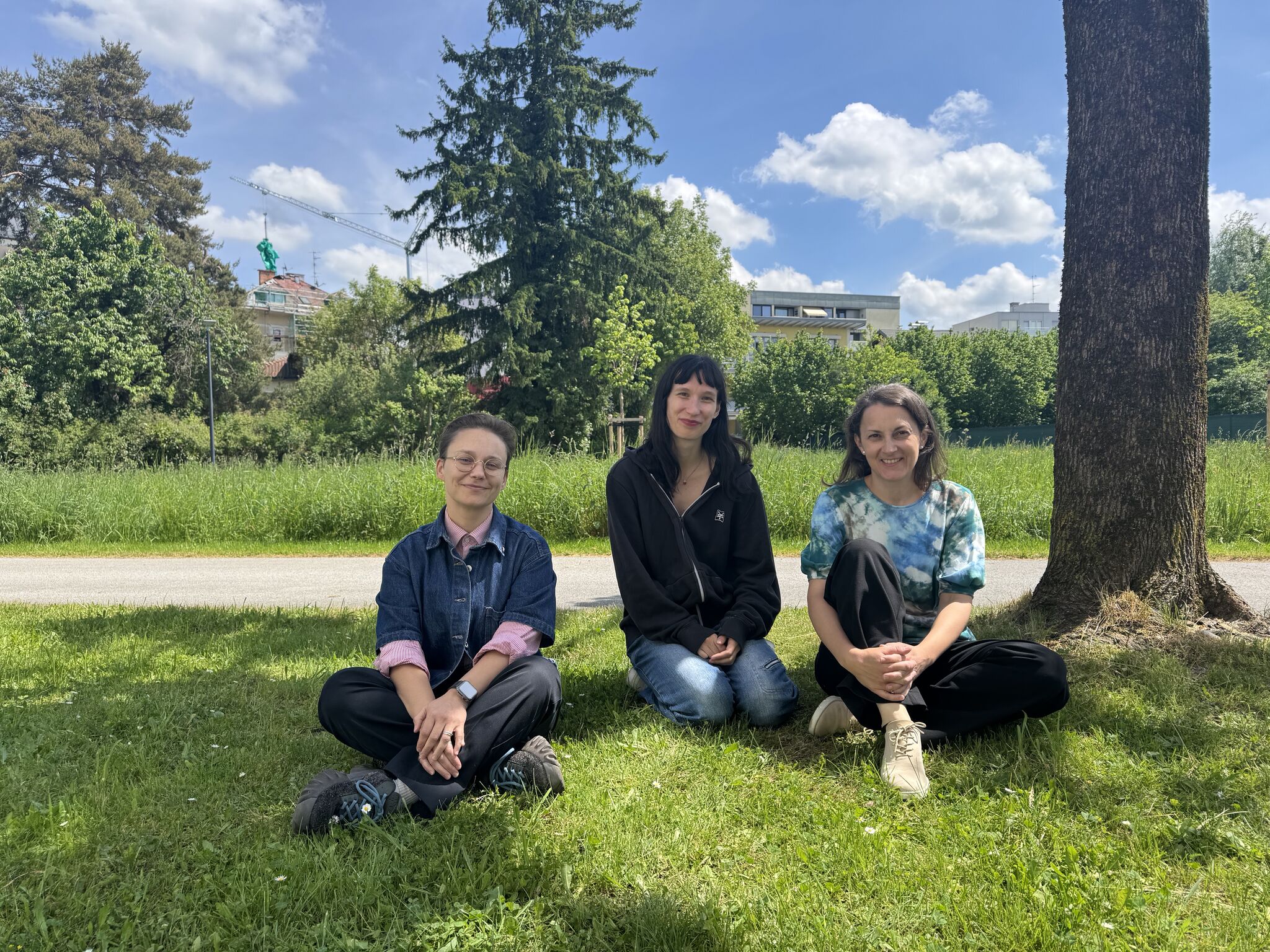
The Team

Verena Fuchsberger
Verena Fuchsberger is Associate Professor at the University of Salzburg’s HCI division. In her research, she focuses on the agency of human and non-human actors in HCI and interaction design, i.e., the relations between individuals, materials and digital-physical artefacts.

Goda Klumbytė
Goda Klumbytė (they/she) is a post-doctoral researcher at the Center for HCI at the University of Salzburg. Their work engages feminist new materialism, posthumanism, human-computer interaction and systems design, activating critical concepts as tools for design in AI and machine learning. Their latest book „Feminist Machine Learning: Towards New Materialist Informatics“ (2026) is available at Bristol University Press.

Ines Filipp
Ines Filipp is a Research Assistant at the HCI Center and a Master’s student in HCI at the University of Salzburg. She has a background in experience and interface design. In her work, she is interested in designing interactive technological experiences that shift attention towards local environments and biodiversity.
Contact us
Feel free to reach out and contact us!
TwT is a project by


This research was funded in whole or in part by the Austrian Science Fund (FWF) 10.55776/PAT3394325